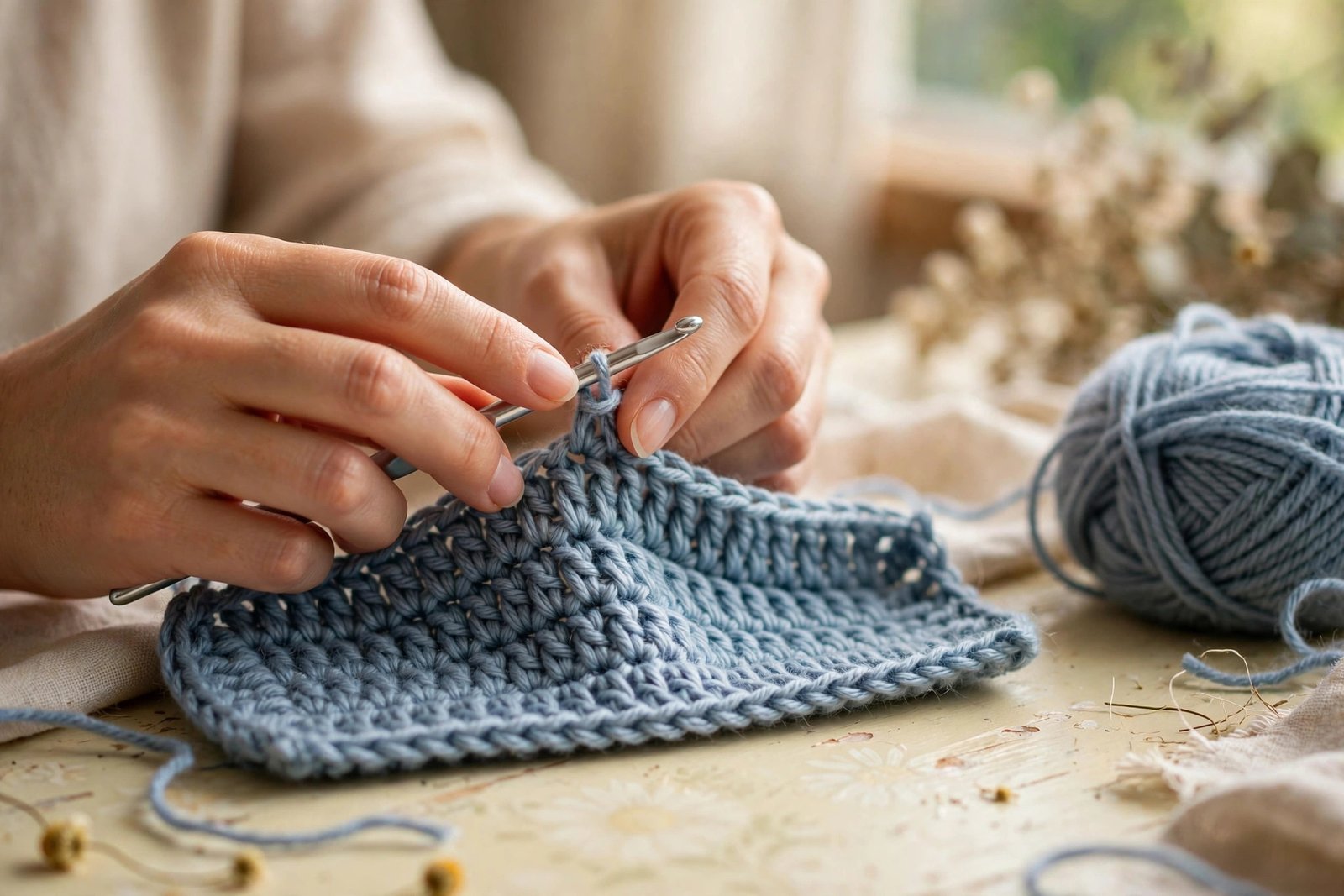
There is a stitch that sits right in the sweet spot of crochet, taller than a single crochet but shorter than a double crochet, with a soft drape and a lovely texture all its own. That stitch is the half double crochet, abbreviated hdc, and it might just become your favorite. I am Ashley, and the half double crochet is the stitch I reach for when I want a hat to work up quickly but still feel cozy, or a sweater that has drape without holes. In this tutorial, I will walk you through every hand movement, show you the little bar that makes hdc special, and help you avoid the mistakes that trip up most beginners.
If you already know the single crochet, you are closer than you think. The half double crochet starts exactly the same way, with one extra yarn over at the beginning and one smooth pull-through at the end. That tiny difference gives you a stitch with more height, more softness, and a beautiful third loop that opens up fun textural possibilities.
What You Will Need
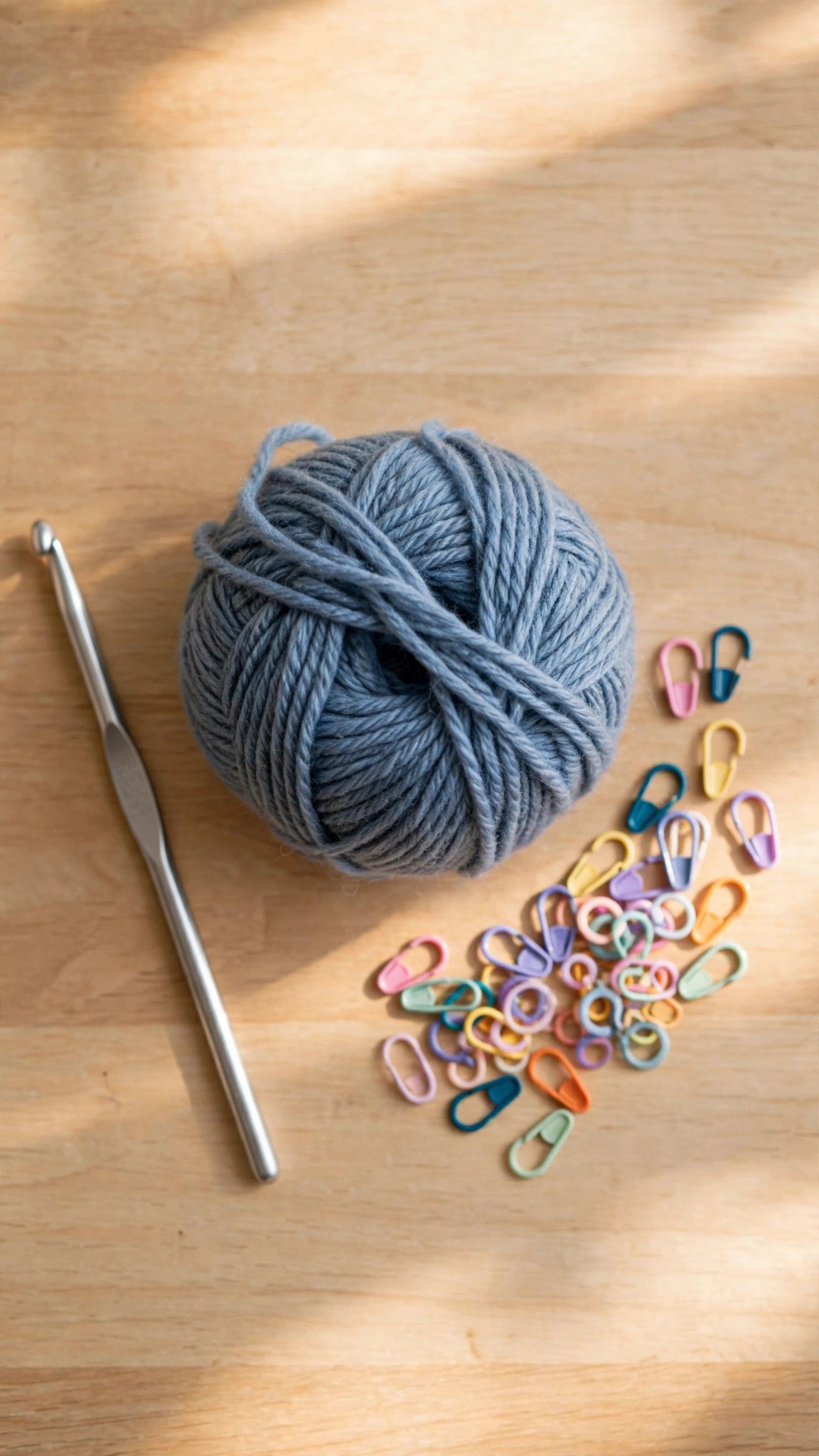
For practice, choose a smooth medium-weight yarn in a light color. A number 4 worsted weight yarn in cream, soft blue, or pale green lets you see each loop clearly. Dark colors and textured yarns like chenille hide the stitch structure, so save those for later. Use the hook size recommended on your yarn label, typically 5 mm (H-8) or 5.5 mm (I-9) for worsted weight.
Before you start the half double crochet, make a small practice swatch: chain 15, then work one row of single crochet into it. This gives you a stable base to practice on, and it means your first hdc row goes into real stitches instead of a wobbly chain. You will also want scissors and a stitch marker for marking the first stitch of each row, because the turning chain in hdc can be sneaky, as I will explain below.
How to Crochet the Half Double Crochet, Step by Step
Step 1: Yarn over first. This is the move that separates hdc from single crochet. With a loop already on your hook from your foundation row, wrap the yarn over the hook from back to front. You now have the working loop plus the yarn over sitting on the hook.
Step 2: Insert the hook. Push the hook into the next stitch of the row below. Go under both loops of the V at the top of the stitch, unless your pattern says otherwise. Keep the yarn over you just made in place as you insert. It should feel smooth. If you have to force it, your tension is too tight.
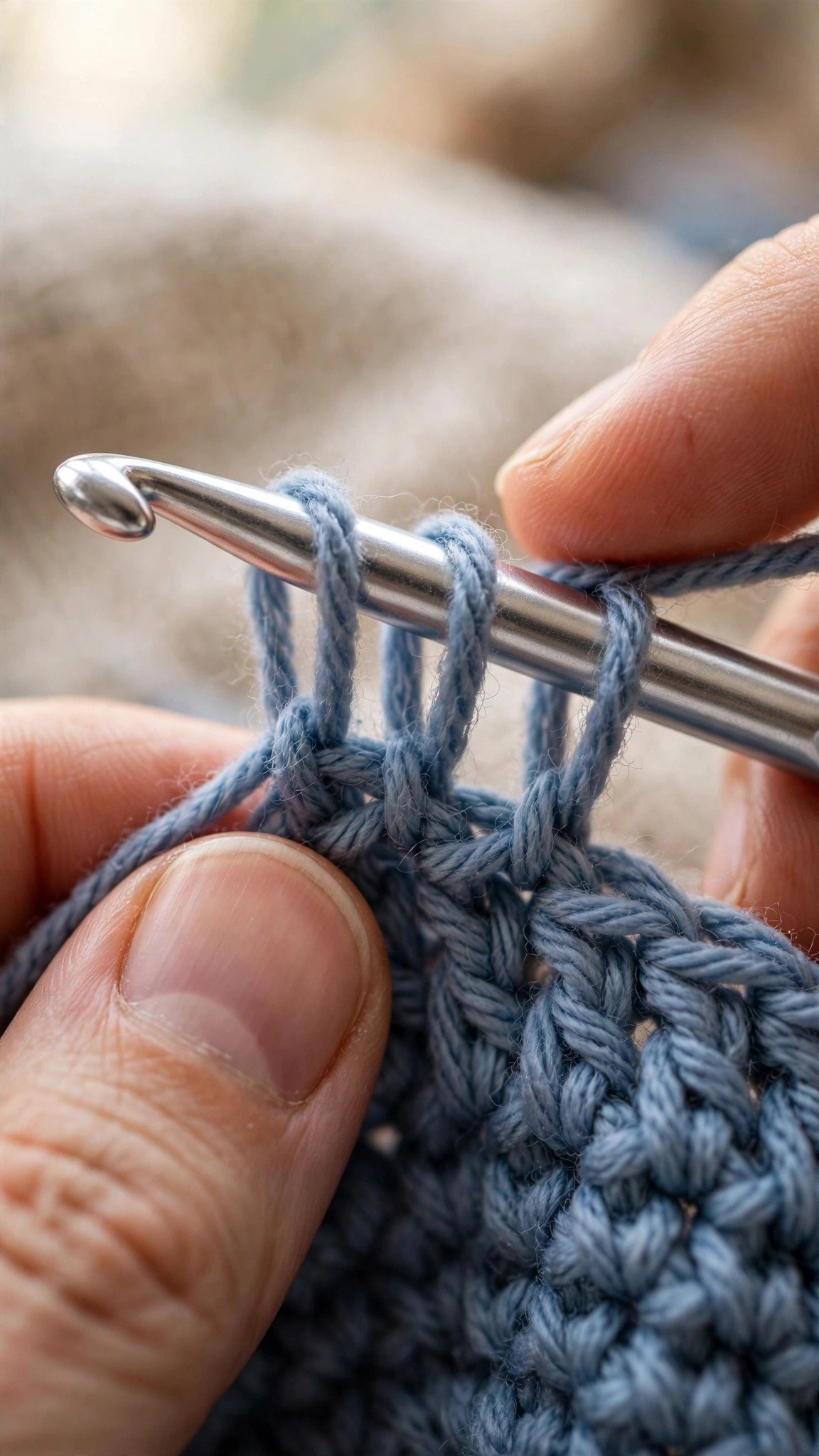
Step 3: Yarn over and pull up a loop. Wrap the yarn over the hook again, then draw it back through the stitch. You now have three loops on the hook. Pause here and look at them. Three even loops is the hallmark of a correct half double crochet setup. If you only see two, you probably forgot the first yarn over and made a single crochet instead. If you see four, you may have wrapped twice.
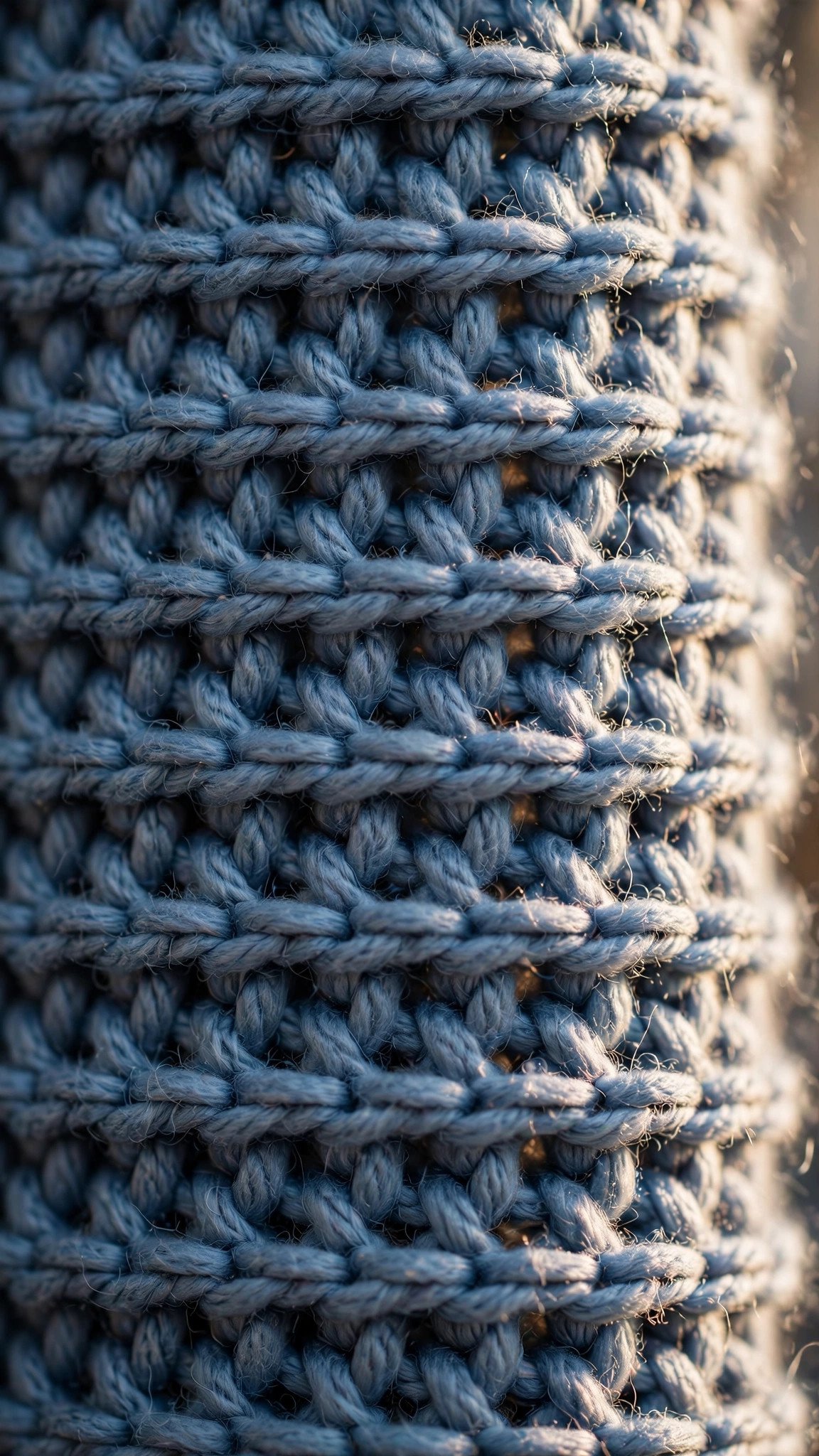
Step 4: Yarn over and pull through all three loops. Wrap the yarn over one more time and draw it smoothly through all three loops on the hook in a single motion. This is the satisfying part. The three loops collapse into one neat stitch with a distinctive horizontal bar across its front. That bar is the signature of the half double crochet, and it is what gives hdc fabric its pretty texture.
Step 5: Repeat across the row. Yarn over, insert, yarn over, pull up a loop, yarn over, pull through three. Say it in your head like a little chant until your hands take over. Work across the entire row, then we will talk about turning.
Starting New Rows: The Turning Chain
When you finish a row of half double crochet, you turn your work and make a turning chain before starting the next row. For hdc, the standard turning chain is chain 2. This chain brings your hook up to the height of the new row.
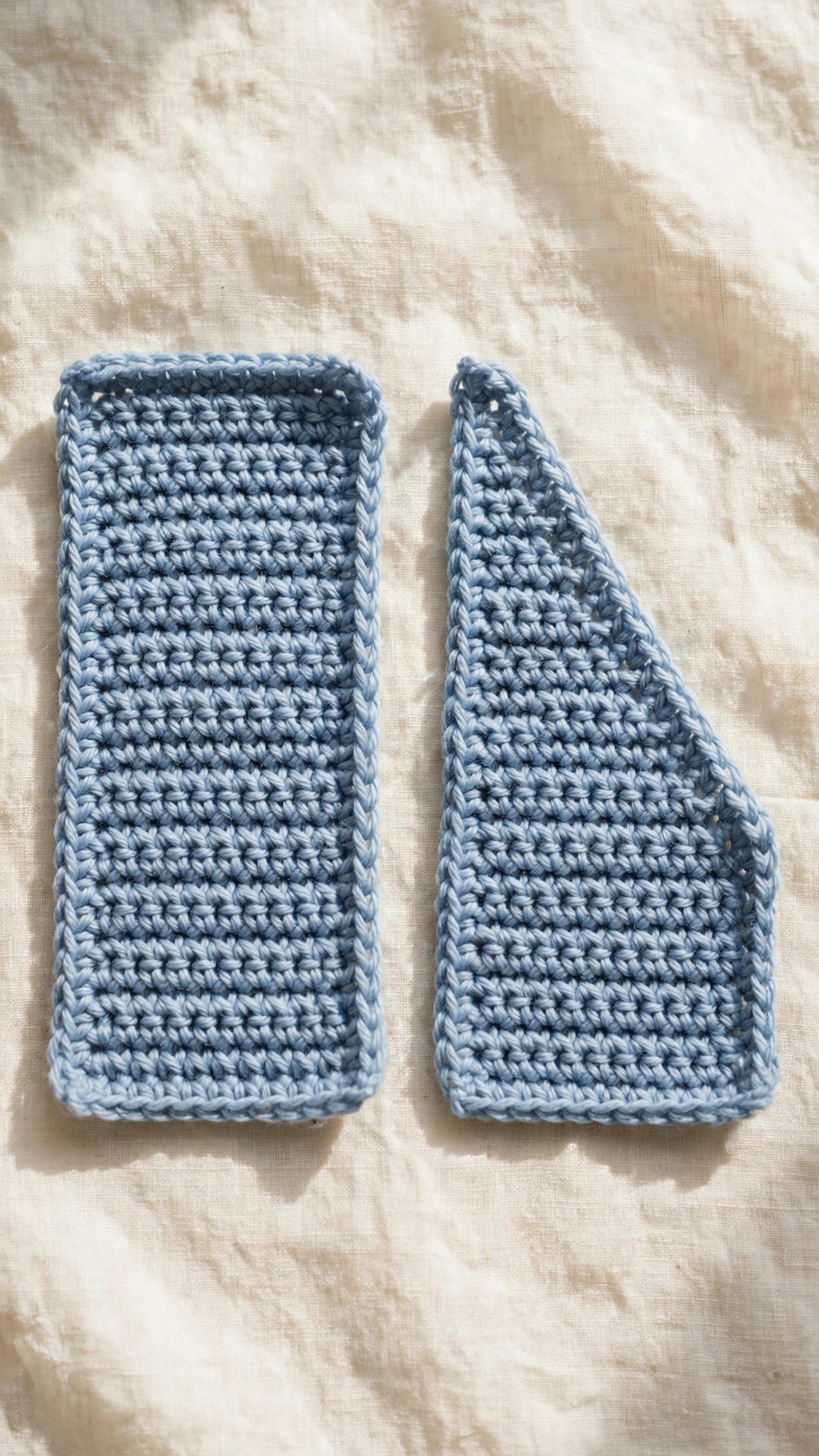
Here is the part that confuses beginners: in most patterns, the chain 2 at the start of a row does not count as a stitch. That means you work your first half double crochet into the very first stitch of the row, the one right at the base of the turning chain. If you skip it, your edges will slant inward and your piece will get narrower with every row. Place a stitch marker in that first stitch until you can spot it easily. Your pattern will always tell you whether the turning chain counts as a stitch, so when in doubt, read that line twice.
Common Half Double Crochet Mistakes
Forgetting the first yarn over. If your stitches look short and dense like single crochet, you are probably skipping the opening yarn over. Slow down for the first few stitches of each practice session and say “yarn over” out loud before you insert the hook. The habit forms quickly.
Pulling through two loops instead of three. At the final step, make sure all three loops come off together. If you accidentally leave one behind, you will get a lopsided stitch and an extra loop that tangles the next stitch. If the three loops feel stuck, your tension is too tight. Loosen your yarn hand a touch.
Working into the wrong part of the stitch. Each half double crochet has a front bar, the horizontal loop across its face. Beginners sometimes insert the hook under this bar instead of under the top V. The top V, the two loops at the very top of the stitch, is the standard insertion point. The front bar is a playground for textured variations later, once the basic stitch feels easy.
Uneven edges. Wavy or slanted edges almost always come from the turning chain confusion described above. Count your stitches every few rows. If the number keeps shrinking, you are skipping the first stitch of the row. A stitch marker is the fastest fix.
Tips for Smooth, Even Half Double Crochet
Keep your three loops the same height. The most common cause of lumpy hdc fabric is pulling the third loop up to a different height than the first two. Try to draw each loop up to the same point on the hook shaft. Consistent loop height is the whole secret of even crochet, and it matters more than speed.
Find your rhythm with the final pull-through. Some crocheters pull through all three loops in one quick motion, while others roll the hook slightly to gather the loops first. Both work. Experiment until you find the motion that feels smooth rather than forced. If the yarn squeaks or drags, you are pulling too tightly.
The half double crochet eats slightly more yarn than single crochet but works up faster because each stitch is taller. For big projects like blankets, that tradeoff is wonderful. You get a soft, warm fabric in less time, which is why hdc is a favorite for baby blankets and winter accessories.
What to Make With Half Double Crochet
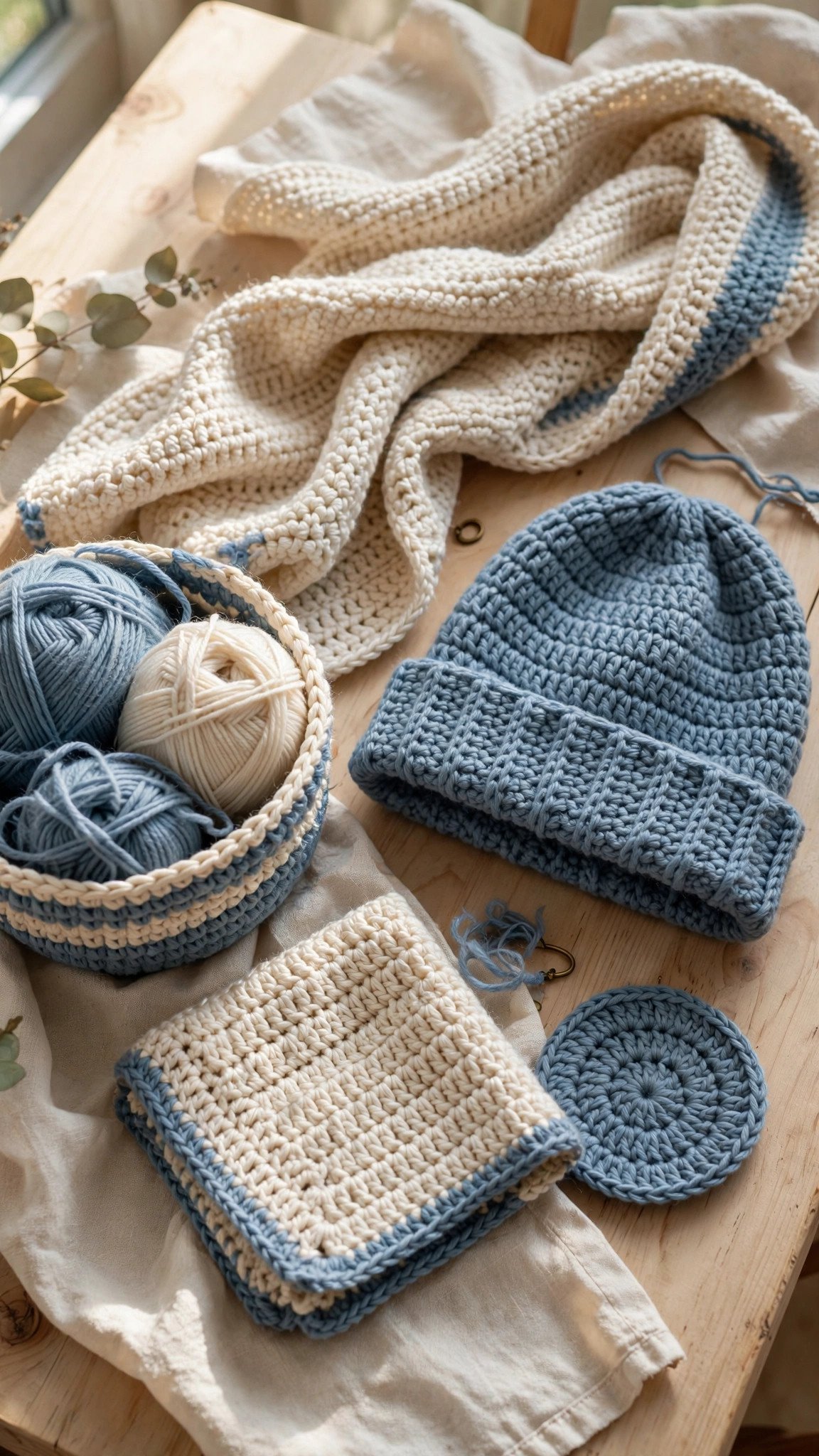
Half double crochet shines in projects that need softness with substance. Hats are the classic choice, because hdc makes a dense, warm fabric that still has a little stretch. Try a simple beanie worked in the round, and you will be amazed how fast it grows. Scarves and cowls in hdc have a beautiful drape and look far more polished than their difficulty suggests.
For the home, hdc makes wonderful baskets, placemats, and cushion covers. The stitch is dense enough to hold its shape but soft enough to feel inviting. Baby blankets in half double crochet are a perfect gift project: quick to finish, cozy to the touch, and impressive to anyone who does not crochet. Once you are comfortable, explore working into the front bar only for a ribbed, knit-like texture that looks much harder than it is.
Half Double Crochet FAQ
What is the difference between single crochet and half double crochet? The half double crochet starts with a yarn over before inserting the hook, which makes it one step taller than single crochet. It produces a slightly softer, drapier fabric and works up a little faster.
Does the chain 2 count as a stitch in half double crochet? In most modern patterns, no. You work the first hdc into the first stitch of the row. Some older patterns count it as a stitch, so always check your pattern notes. When a pattern wants the turning chain to count, it will say so clearly.
Why do my half double crochet rows look slanted? Slanted edges usually mean the stitch count is changing, most often because the first stitch of the row is being skipped. Count your stitches and use a stitch marker in the first stitch until the placement feels automatic.
What is the third loop in half double crochet? The horizontal bar across the front of the stitch is sometimes called the third loop. Working into it creates a lovely braided texture. It is an intermediate technique, so master the basic stitch first and treat the third loop as a fun bonus to explore later.
Is half double crochet good for beginners? Absolutely. It is one of the first stitches beginners should learn after single crochet. The movements are simple, the fabric is forgiving, and projects grow quickly, which keeps motivation high.
The half double crochet is proof that a small change can make a big difference. One extra yarn over, and suddenly you have height, drape, and texture that single crochet cannot give you. Practice it until the rhythm feels automatic, then try it in a hat or a scarf and enjoy how fast your work grows. Next, you might like the single crochet tutorial if you have not mastered it yet, or keep building your skills one stitch at a time. Happy stitching.
Written by Wren
I am Wren, and I believe crochet should be fun from the very first loop. I test every tutorial and pattern here myself before it lands on Loop & Lark.