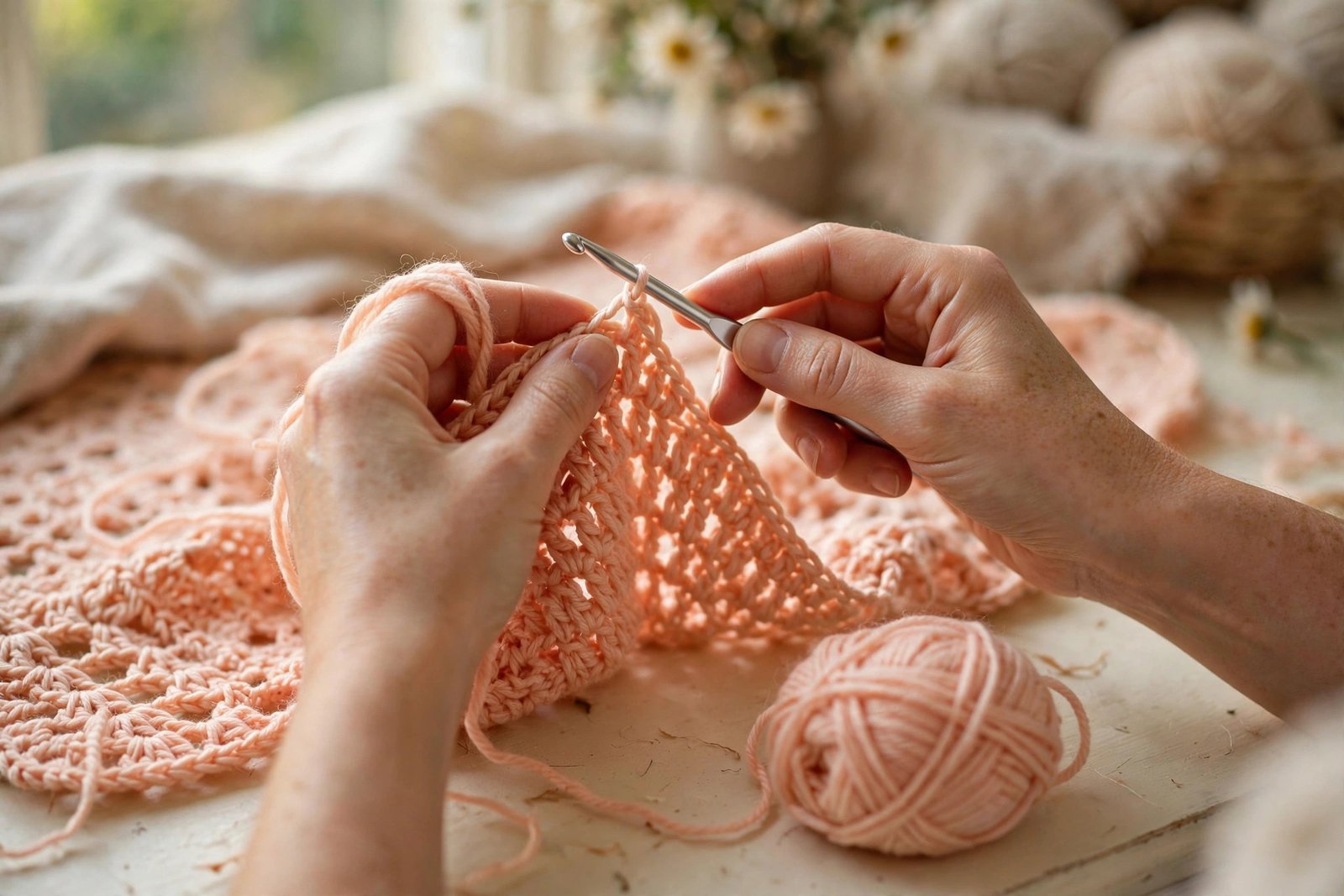
If crochet stitches were runners, the double crochet would be the sprinter. It is tall, it is fast, and it covers ground in a hurry. Abbreviated dc, the double crochet is the stitch behind breezy summer tops, open granny square blankets, and lacy shawls that look far more advanced than they are. I am Ashley, and I want you to know that the double crochet looks intimidating in diagrams, all those tall posts and yarn overs, but your hands already know most of the moves if you have tried the stitches in my earlier tutorials. Let us break it down together.
One quick note for my international readers: in US terms, which this blog uses, the double crochet is a tall stitch made with one yarn over. In UK terms, this same stitch is called a treble crochet. The instructions below follow US terminology, so if your pattern says “dc,” you are in the right place.
What You Will Need
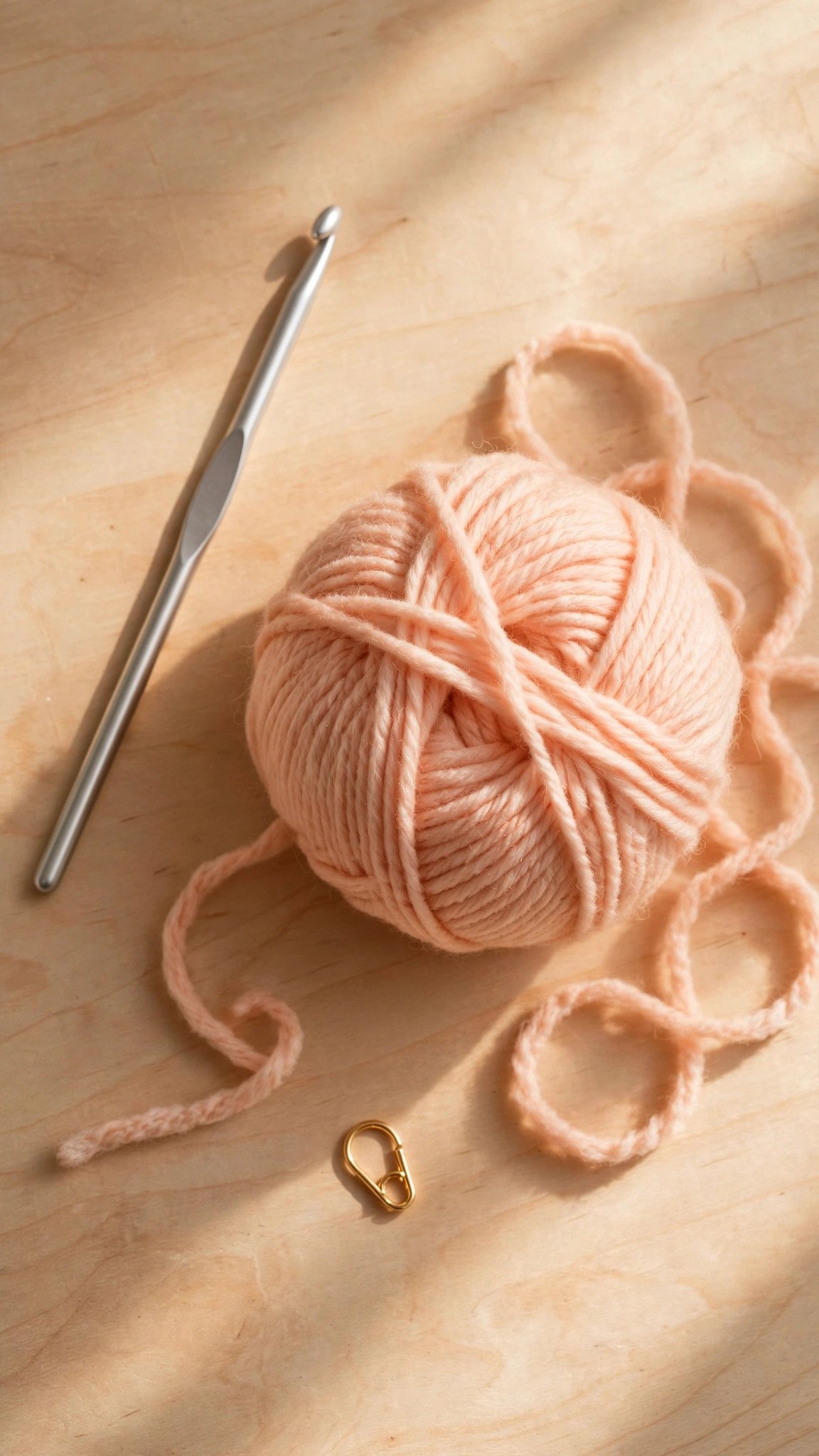
Choose a smooth medium-weight yarn in a light, cheerful color. Because double crochet creates an open fabric with visible spaces, a light color like cream, peach, or soft mint shows off the stitch definition beautifully. Use the hook size on your yarn label, usually 5 mm (H-8) or 5.5 mm (I-9) for worsted weight.
Make a practice base first: chain 16, then work one row of single crochet into the chain. This gives you a firm row to practice into. Double crochet into a bare chain is possible but fiddly for beginners, so the single crochet base row makes your first attempts much more pleasant. Grab scissors and a stitch marker as well.
How to Crochet the Double Crochet, Step by Step
Step 1: Yarn over. With the loop from your base row on the hook, wrap the yarn over the hook from back to front, exactly as you would for half double crochet.
Step 2: Insert the hook. Push the hook into the next stitch of the row below, going under both top loops. If you are starting a brand-new row, chain 3 first (your turning chain, more on that below), then work into the next stitch as your pattern directs.
Step 3: Yarn over and pull up a loop. Wrap the yarn over again and draw it through the stitch. You now have three loops on the hook, just like half double crochet. Here is where the paths diverge.
Step 4: Yarn over and pull through two loops. Wrap the yarn over and draw it through only the first two loops on the hook. Two loops remain. You have completed half of the stitch, and you can already see it growing taller.
Step 5: Yarn over and pull through the last two loops. One more yarn over, one more pull through two, and the stitch is done. What remains is a tall post with a neat top. The rhythm is: yarn over, insert, pull up, pull through two, pull through two. Practice saying it until it becomes a chant.
Step 6: Repeat across the row. Keep going, keeping your loops even and your tension relaxed. Double crochet rows grow satisfyingly fast, which makes this a great stitch for impatient beginners. You will see real fabric in minutes.
Starting New Rows: The Turning Chain
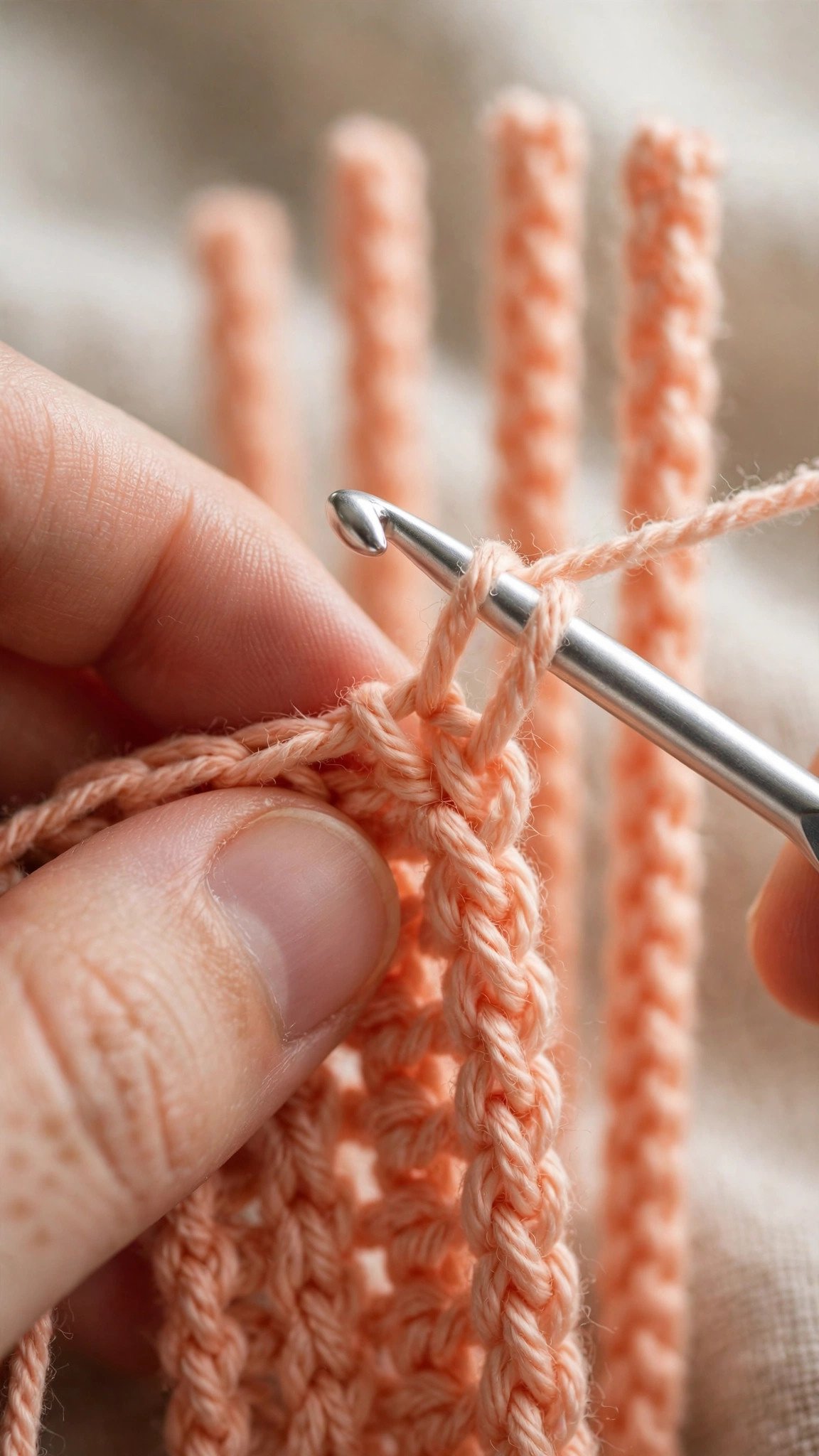
For double crochet, the turning chain is chain 3. This taller chain matches the height of the tall stitches. And here is the classic beginner trap: in the vast majority of patterns, the chain 3 counts as the first double crochet of the new row.
That means you skip the very first stitch at the base of the chain and work your first real dc into the second stitch of the row. At the end of the row, you work your last dc into the top of the turning chain from the previous row. Forget this and your edges will either grow extra stitches or shrink. Count your stitches for the first several rows. If your count keeps increasing by one, you are working into the base of the chain when you should skip it. A stitch marker in the top of the turning chain makes the end-of-row stitch easy to find.
Common Double Crochet Mistakes
Pulling through all three loops at once. If your stitches look short, you may be finishing like a half double crochet, pulling through three loops in one motion. Double crochet always finishes in two stages: through two, then through two. Slow down the ending until the two-stage rhythm feels natural.
Forgetting the turning chain rules. The chain-3-counts-as-a-stitch convention is the source of most double crochet edge problems. Read your pattern’s notes. If it says the turning chain counts as a stitch, skip the first stitch. If it says it does not count, work into the first stitch. When patterns do not specify, assume it counts, since that is the modern standard.
Inconsistent loop height. Double crochet has more loops in play than shorter stitches, so uneven tension shows more. Focus on drawing each “pull up a loop” to the same height on the hook shaft. Tall, even loops make tall, even stitches.
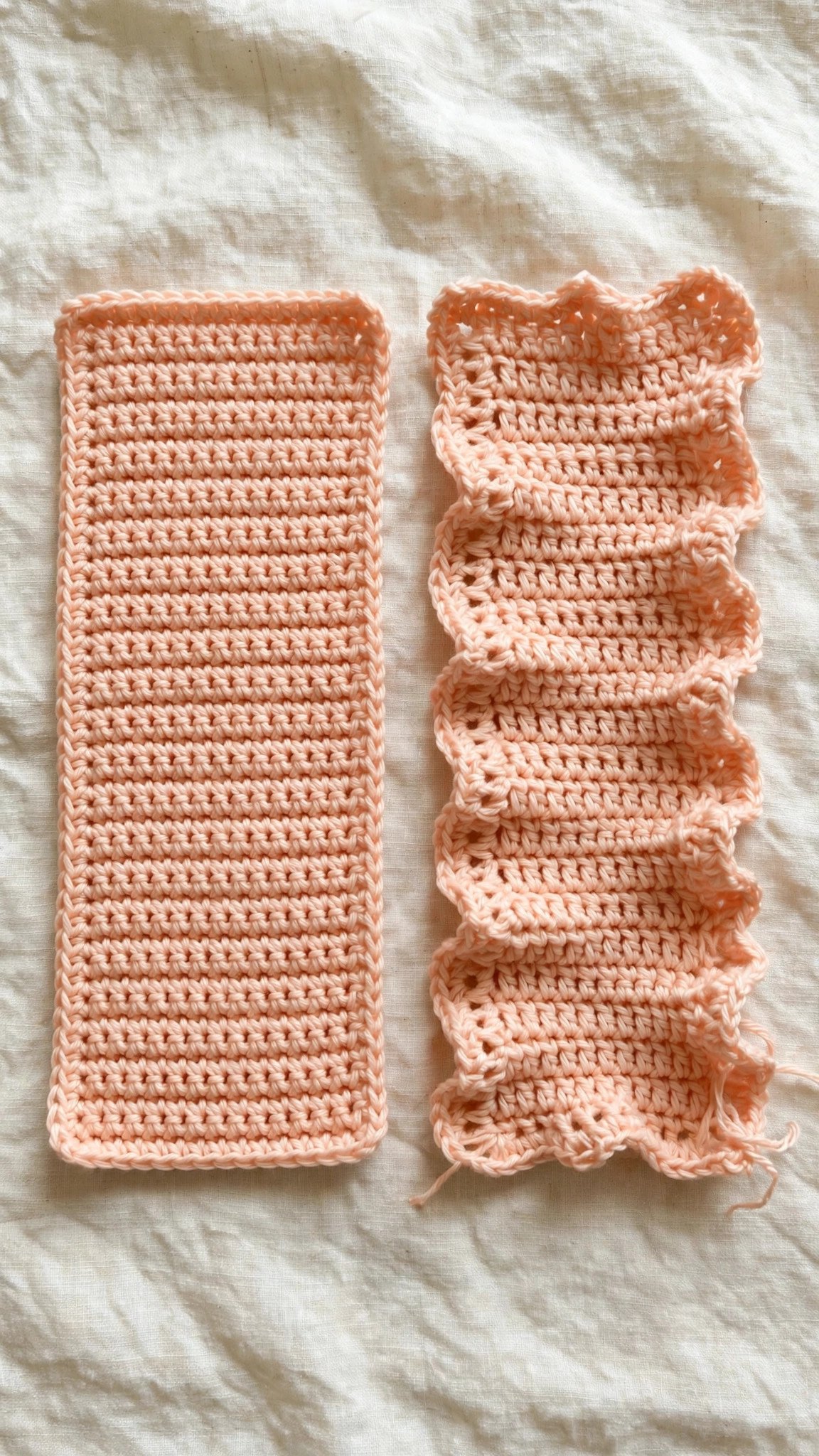
Holes at the edges. Gaps along the sides of double crochet fabric usually come from a loose turning chain. Try chaining a little more snugly, or use a chain-2 turning chain instead of chain 3 if your pattern allows it. Many modern designers prefer chain 2 for cleaner edges.
Tips for Beautiful Double Crochet
Relax your grip. Double crochet involves more yarn overs than shorter stitches, and a death grip on the hook makes every yarn over a struggle. Hold the hook firmly enough to control it but loosely enough that the yarn slides. If your shoulder creeps up toward your ear, drop it, shake out your hand, and reset.
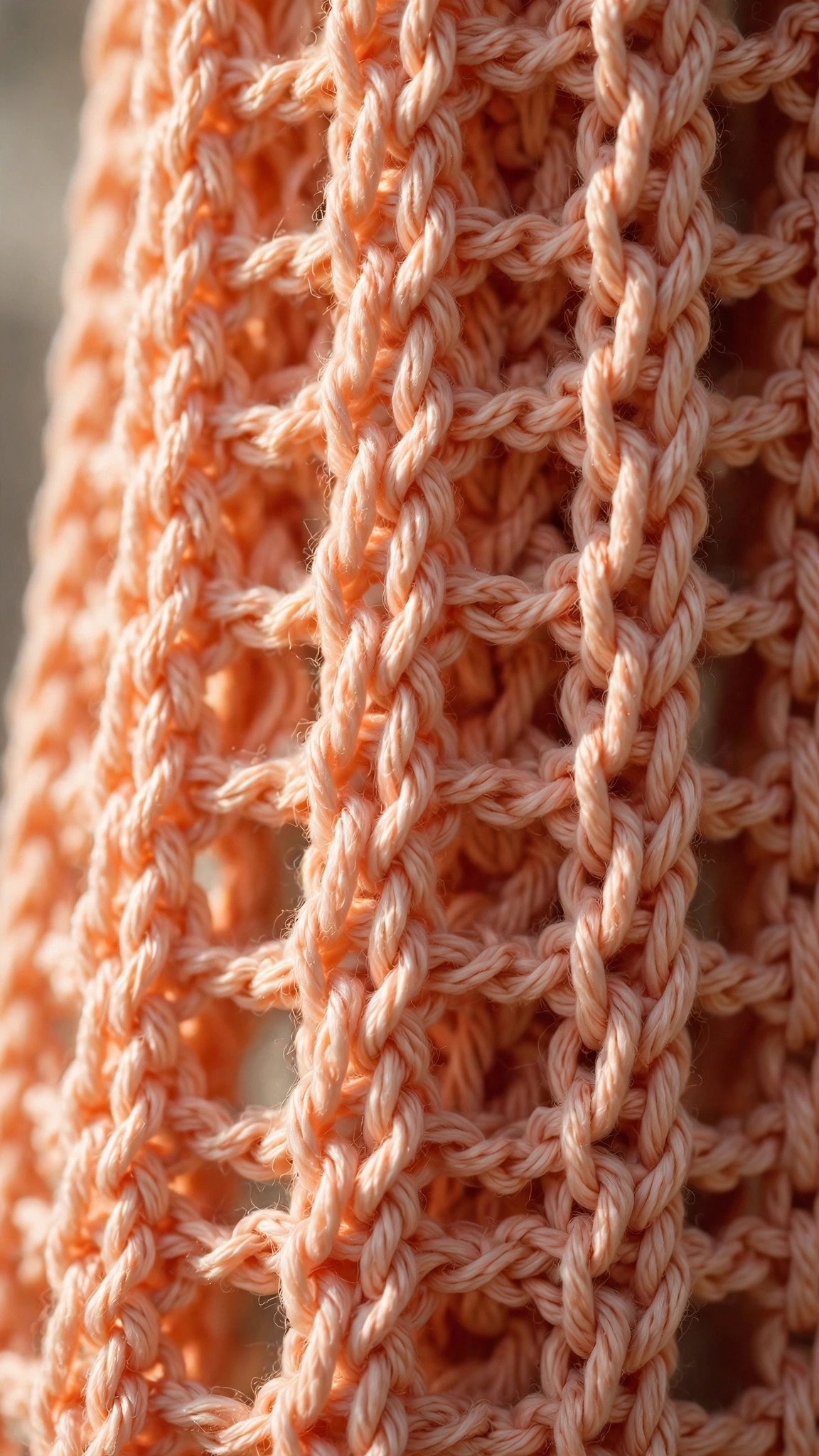
Watch the post, not just the top. The tall post of the double crochet should stand straight. If your posts lean, you may be inserting the hook at an angle or pulling the final loops unevenly. Straight posts make the beautiful vertical lines that define double crochet fabric.
Embrace the speed. Double crochet is one of the fastest stitches to work, which makes it perfect for blankets and large garments. A double crochet blanket grows visibly in a single evening, and that quick progress is wonderful motivation. Just remember that speed comes after accuracy. Slow, correct stitches beat fast, messy ones every time.
What to Make With Double Crochet
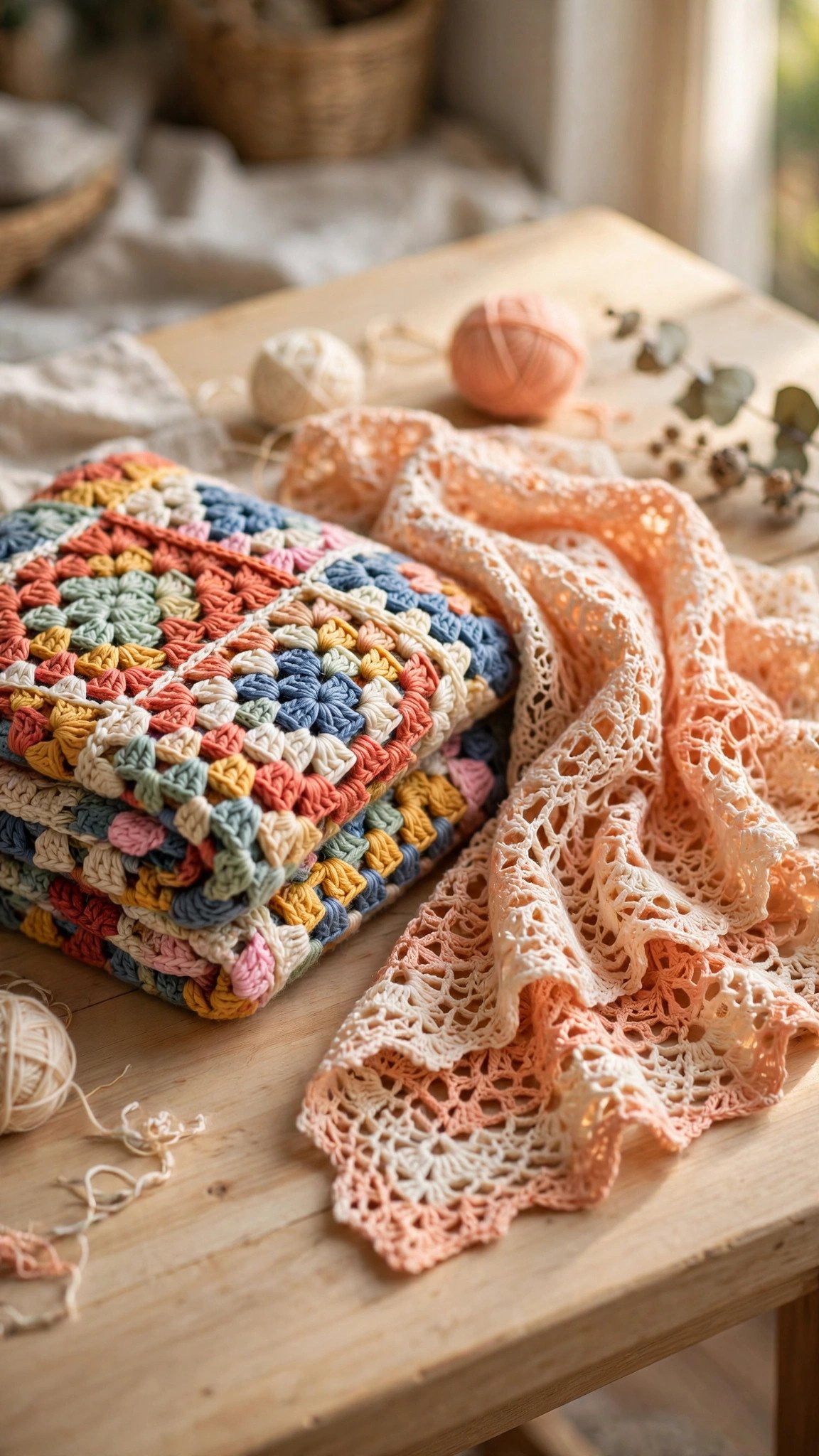
Double crochet is the backbone of classic granny squares, and granny squares become blankets, cardigans, bags, and cushion covers. If you can double crochet, you can join the great granny square tradition, and I highly recommend it. The stitch also makes airy summer tops, beach cover-ups, and market bags where a little openness is a feature, not a flaw.
For cozy projects, try a double crochet throw in a soft, chunky yarn. The tall stitches trap warmth while working up quickly, and the texture looks impressive with minimal effort. Shawls and wraps in double crochet drape beautifully and make thoughtful handmade gifts. Once the basic stitch is comfortable, explore clusters and shells, which are simply groups of double crochets worked together for gorgeous texture.
Double Crochet FAQ
What is the difference between double crochet and half double crochet? Double crochet finishes in two pull-through-two stages, making it one step taller than half double crochet, which pulls through all three loops at once. Double crochet fabric is more open and drapier, while half double crochet is denser.
Why is US double crochet called treble crochet in the UK? The two traditions named stitches differently long ago, and the names stuck. US double crochet equals UK treble crochet. Always check which terminology your pattern uses before you start, because the difference matters enormously.
Does the chain 3 always count as a stitch? In most modern patterns, yes. But some designers prefer it not to count for cleaner edges. Your pattern should state its convention in the notes section. When it does not, assume it counts.
Why are there gaps in my double crochet fabric? Small gaps are normal. Double crochet is naturally an open stitch. Large or irregular gaps usually mean uneven tension or inconsistent loop height. Practice keeping every loop the same size and the fabric will even out.
Is double crochet hard for beginners? Not at all. It has more steps than single crochet, but each step is simple. Most beginners make a decent double crochet within their first practice session. The turning chain rules take a little longer to internalize, so be patient with your edges.
The double crochet is where crochet starts to feel fast and a little bit magical. Tall stitches, quick rows, and fabric that grows while you watch. Practice the rhythm until your hands move without thinking, then cast on something big and enjoy the ride. If you have not yet tried it, my single crochet tutorial is a great warm-up. Happy stitching.
Written by Wren
I am Wren, and I believe crochet should be fun from the very first loop. I test every tutorial and pattern here myself before it lands on Loop & Lark.