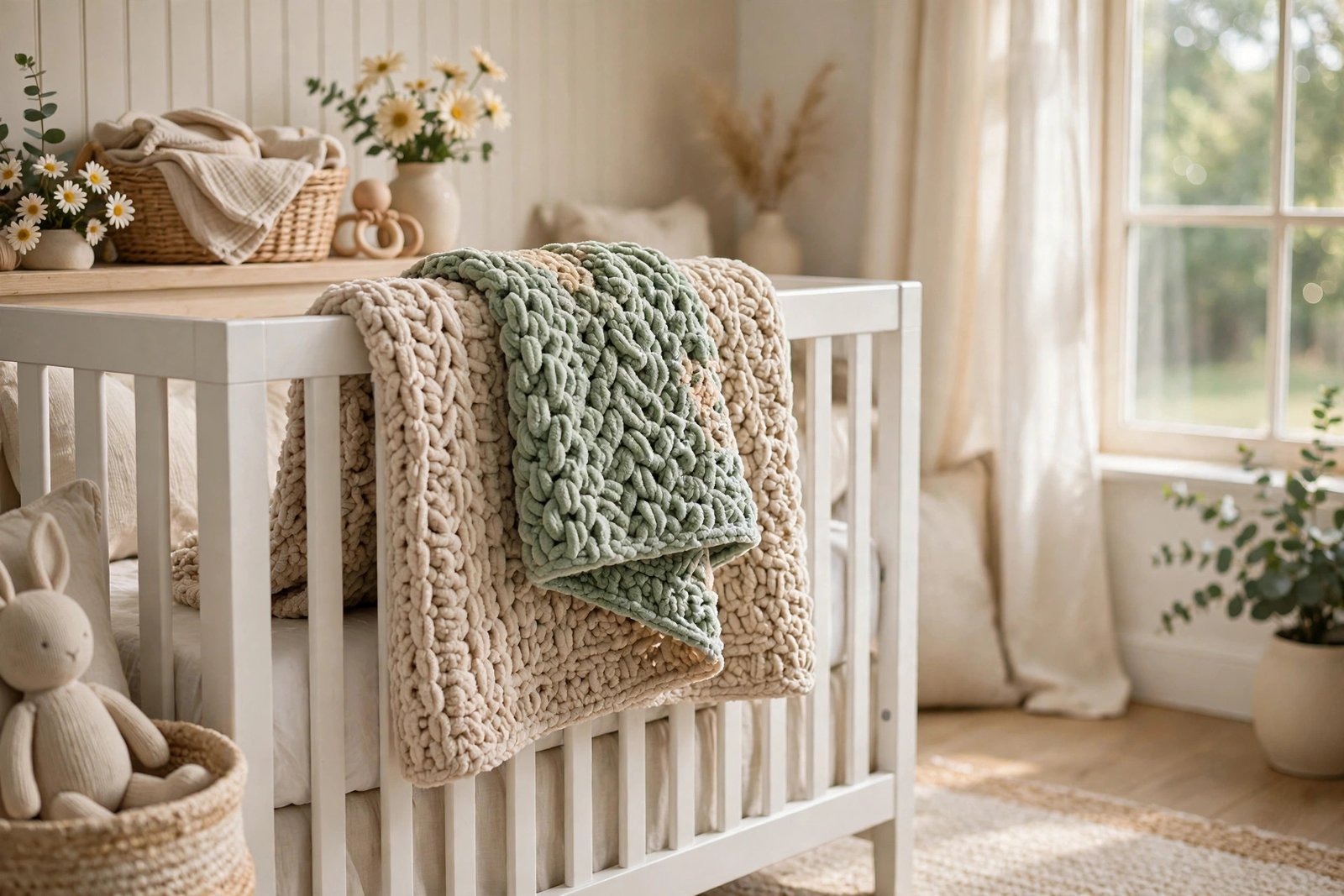
A baby blanket is the project that turns a beginner into a gift-giving hero. The stitch is simple, the yarn does all the talking, and the finished blanket is soft enough to make a room of adults go collectively soft too. I made my first baby blanket for my best friend’s daughter before I could crochet in a straight line, and that blanket still lives on the back of their couch five years later. This is the pattern I wish I had started with: one gentle stitch, soft chenille yarn, and colors that work for any baby, any nursery, any family.
The stitch is called moss stitch, also known as linen stitch, and it creates a fabric that looks like tiny woven rows. It has no holes for little fingers to catch on, it drapes like a dream, and the pattern is exactly one row repeated until you decide you are done. If you can single crochet and chain, you already know everything this blanket requires.
Why a Baby Blanket Is the Ideal Beginner Project
Baby blankets sit in the sweet spot of crochet projects: small enough to finish before your enthusiasm fades, big enough to feel like a real accomplishment. A receiving-size blanket of 30 by 36 inches takes most beginners about a week of cozy evenings. Compare that to an adult throw, which can take three or four weeks, and you can see why baby blankets are where so many crocheters fall in love with big projects.
The moss stitch keeps things interesting without adding difficulty. Instead of identical rows of the same stitch, you alternate single crochet and chain spaces, and the fabric grows with this lovely basketweave texture that looks far fancier than it is. It is the kind of stitch that makes experienced crocheters nod approvingly and beginners feel like geniuses.
There is also a practical bonus: baby blankets forgive wobbly tension better than almost anything. Chenille yarn is puffy and plush, so it smooths over the small inconsistencies that a tight cotton would show off. Your early rows and your final rows will look remarkably similar, and that is a gift when you are learning.
Picking a Baby-Safe, Super Soft Yarn
For baby makes, yarn choice matters more than almost anything else. You want yarn that is soft against delicate skin, machine washable (because babies are tiny chaos machines), and free of scratchy fibers or dyes that bleed. My go-to for this blanket is Bernat Baby Blanket, a super bulky weight 6 chenille yarn. Each ball holds 220 yards, and the texture feels like a cloud had a baby with a marshmallow.
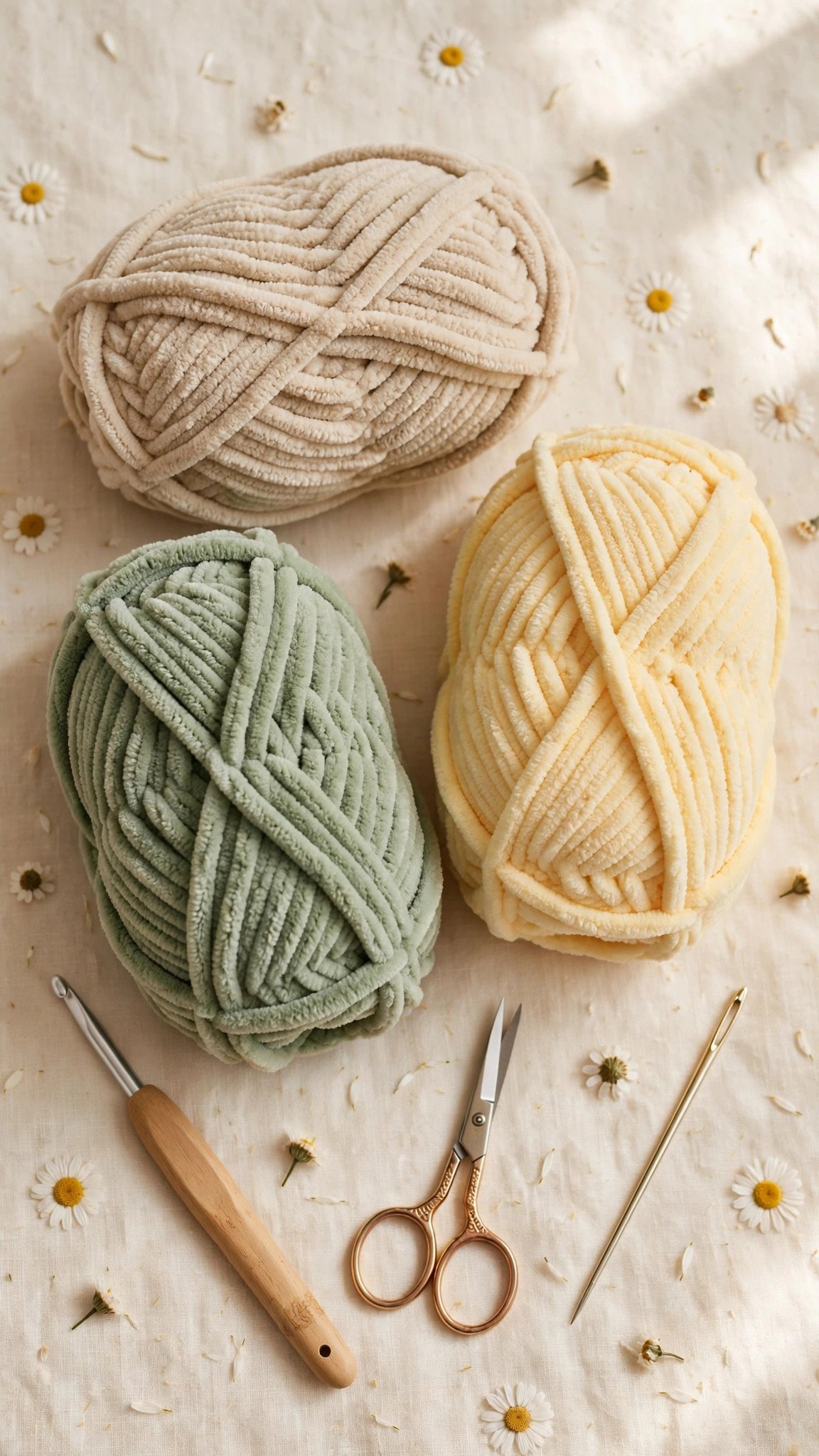
- Yarn: 3 balls of Bernat Baby Blanket (super bulky 6, 220 yards each), about 660 yards total for the 30 by 36 inch size.
- Hook: 8 mm, US size L-11. Chenille yarn needs room to breathe, so resist the urge to size down. A bigger hook keeps the fabric drapey instead of stiff.
- Notions: a yarn needle with a large eye, small scissors, and two stitch markers for your corners.
A word on chenille yarn: it can shed a few fibers on the first wash, and the stitches can be harder to see than with smooth acrylic. Both are normal. Work in good light, count your chain spaces for the first few rows until you trust your hands, and you will be fine. If the stitch visibility worries you, my beginner hook guide has tips for choosing tools that make tricky yarn easier.
Safety note for anything a baby will actually use: skip buttons, ribbons sewn onto the blanket, or any small embellishment that could come loose. Keep it all yarn, all the way. Soft, simple, and washable wins every time.
How Much Yarn and What Size to Make
The most common question in every baby blanket group is about baby blanket size: how big should you make it? The answer depends on how the blanket will be used:
- Receiving blanket: 30 by 36 inches, chain 91. The classic shower gift size. Fits a car seat, a stroller, and a crib for the early months. This is the size in the pattern below.
- Crib blanket: standard crib blanket dimensions are 36 by 54 inches, chain 109. For toddlers who drag their blanket everywhere like a security detail. Plan on 4 balls of yarn.
- Lovey or security blanket: 14 by 14 inches, chain 41. A tiny square that becomes a child’s most precious possession. One ball is plenty.
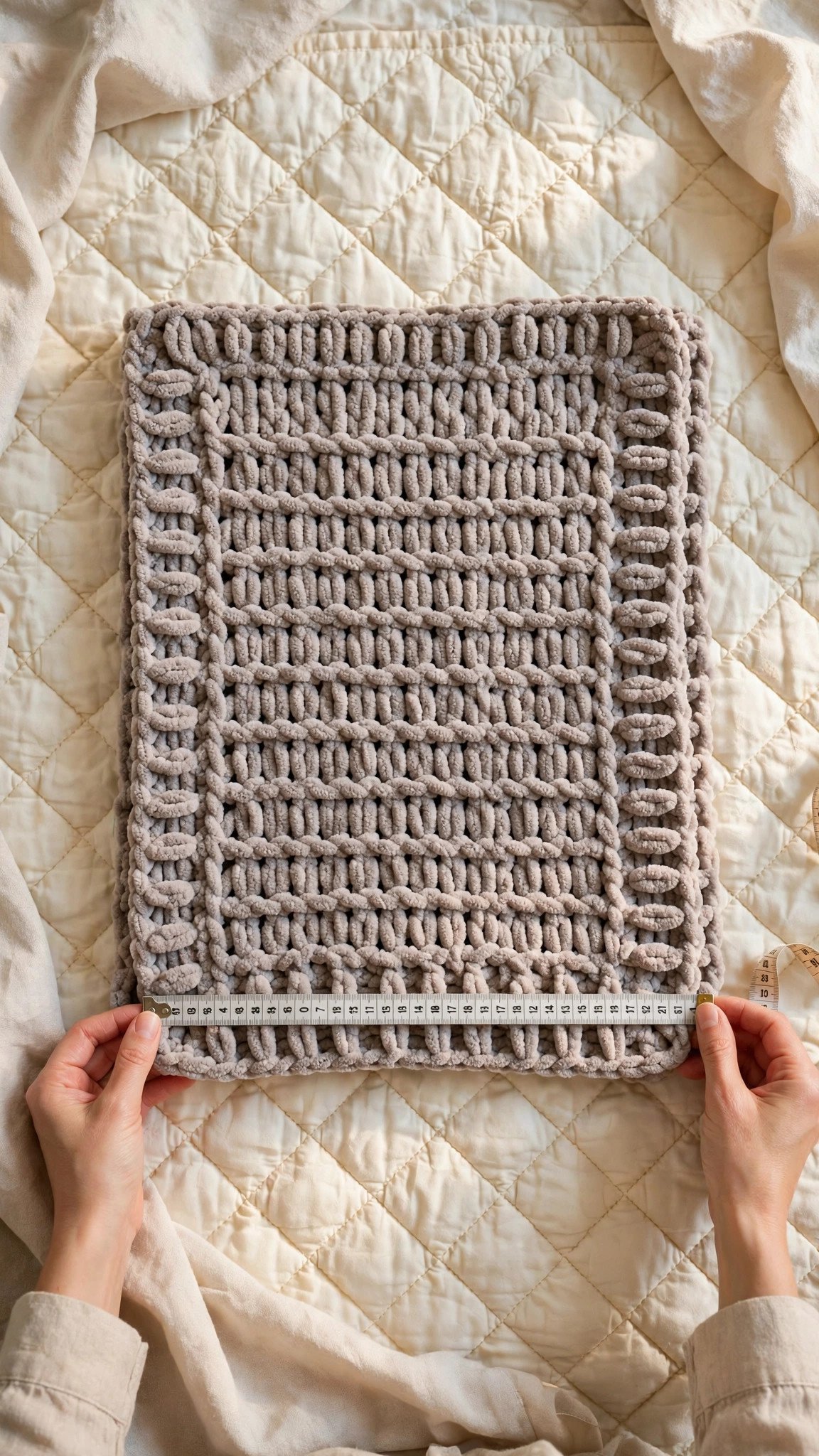
As a rough rule, the yarn needed for a baby blanket in super bulky weight is about 600 to 700 yards for the receiving size. For worsted weight yarn with a 5.5 mm hook, the same size needs about 900 to 1,000 yards because the thinner yarn takes more stitches to cover the same area. When in doubt, buy one extra ball. Leftover yarn becomes a matching hat, and matching sets make legendary shower gifts.
The Soft Moss Stitch, Step by Step
You only need two moves for moss stitch: ch (chain) and sc (single crochet). That is the whole stitch dictionary for this blanket.
Foundation row: Chain 91 for the receiving size. In row 1, work one single crochet into the second chain from your hook. Then repeat this across: chain 1, skip the next chain, single crochet into the next chain. End the row with a single crochet in the last chain. Turn your work. You should have 45 chain spaces.
The repeat row: Chain 1 and turn. Work one single crochet into the first chain-1 space from the row below. Then repeat across: chain 1, skip the single crochet, single crochet into the next chain-1 space. End with a single crochet into the last chain-1 space. Turn.
That repeat row is the entire rest of the blanket. Every row lands its single crochets into the chain spaces of the row below, which creates that woven, hole-free fabric. Keep going until your blanket measures 36 inches long, which takes about 75 to 80 rows with this yarn and hook.
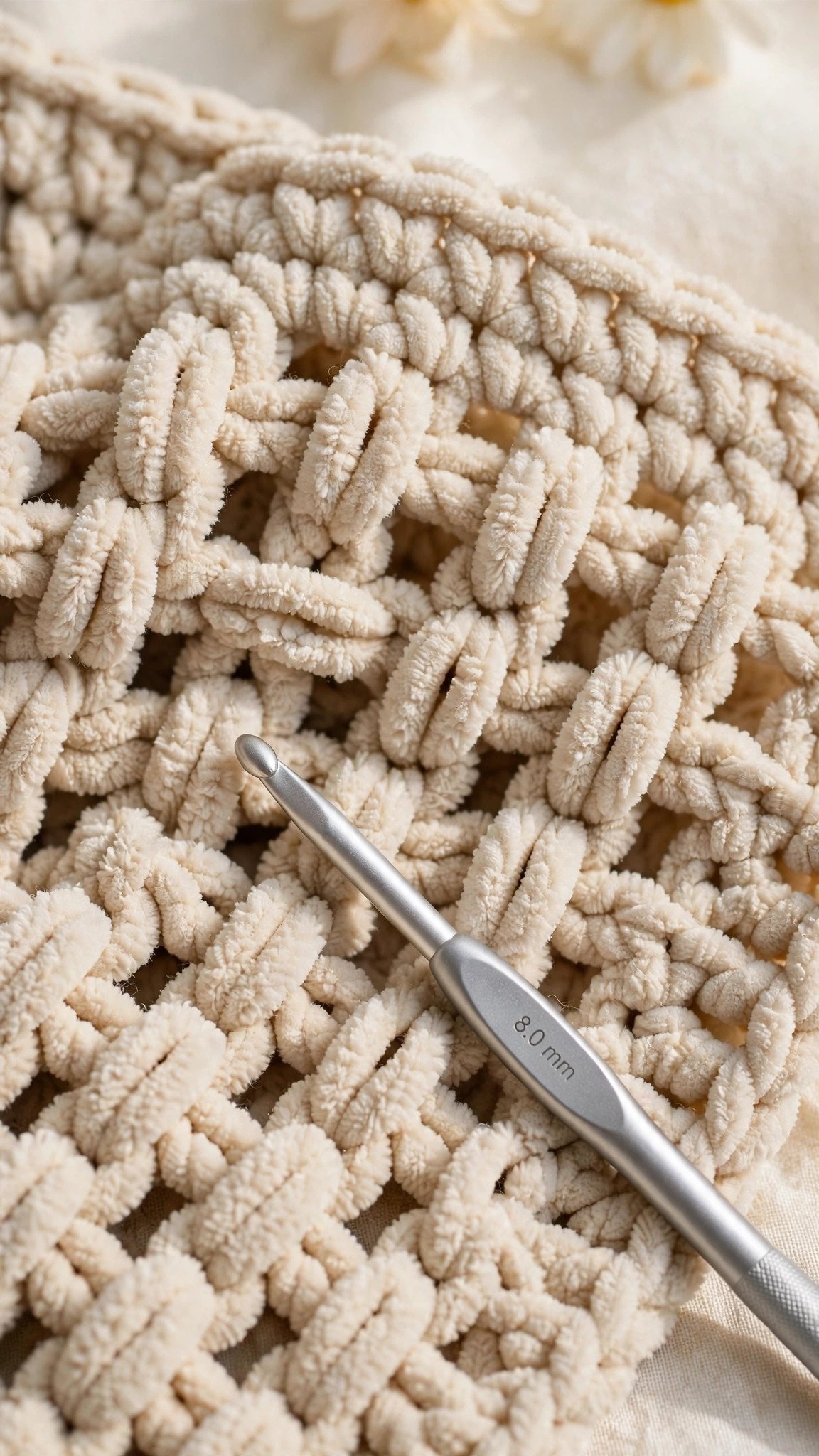
Two tips that save beginners a lot of frogging. First, count your chain spaces every few rows: you should always have 45. If you have 44, you skipped one; if you have 46, you worked an extra. Second, your edges are simply single crochet stitches at each end, so clip a stitch marker into the first and last stitch of every few rows until your hands learn where they are. New to crochet entirely? My step by step beginner guide walks you through your first chain and single crochet before you cast on.
Gentle Gender Neutral Color Ideas
Gender neutral does not mean boring, and it definitely does not mean everything has to be gray. The trick is choosing colors inspired by nature rather than by the baby aisle: warm oatmeal, sage green, butter yellow, soft terracotta, dusty blue, warm white, and mushroom taupe all read modern and calm.
Here are three palettes I keep coming back to:
- Warm minimal: oatmeal as the main color with two butter yellow stripes near each end. Timeless and photograph-ready.
- Garden soft: sage green with a warm white border. Feels like a walk through a herb garden.
- Sunny neutral: soft terracotta with cream stripes. Warm, cheerful, and gorgeous in nursery photos.
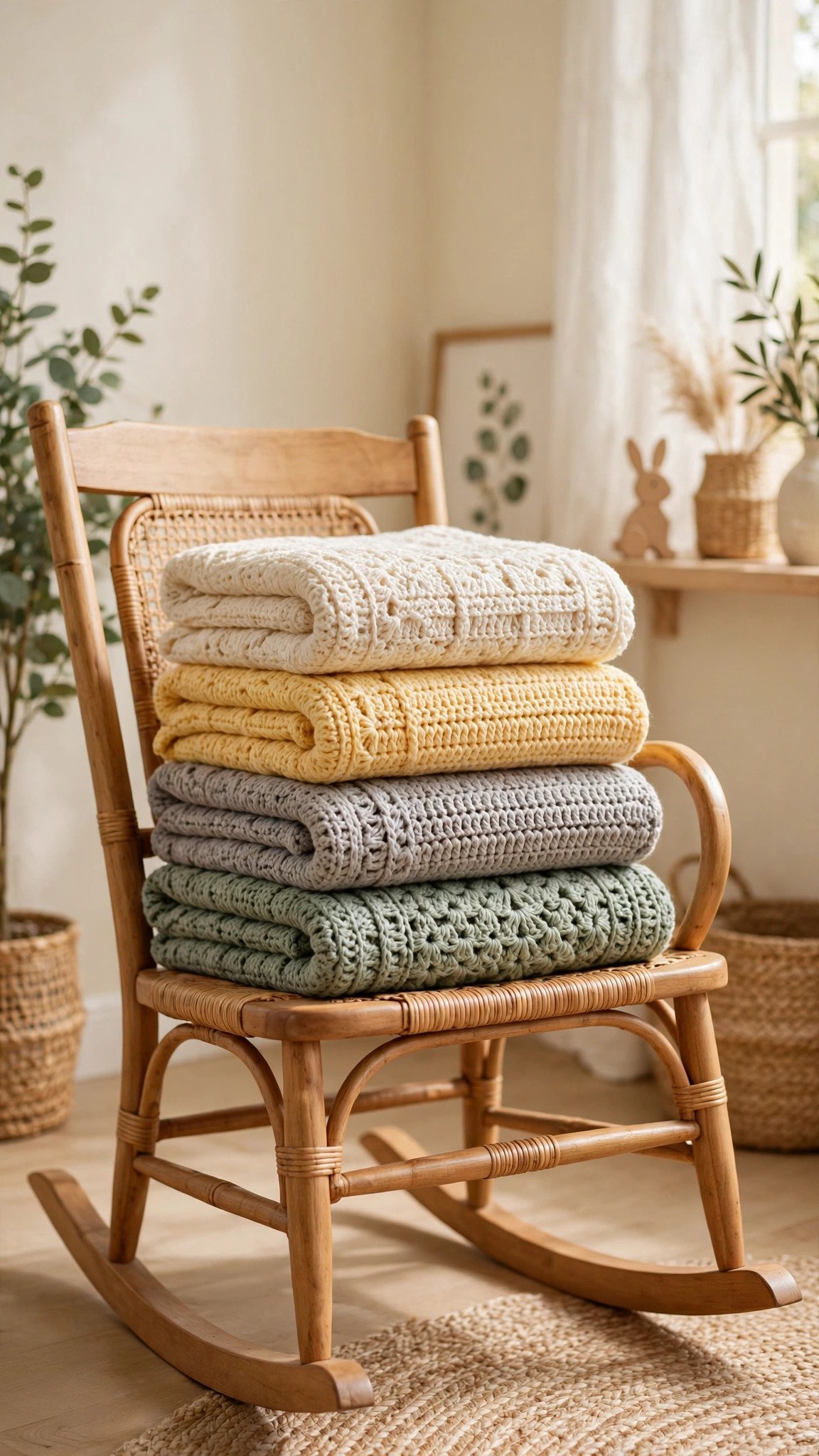
Changing colors in moss stitch is painless. Finish the last single crochet of a row by pulling the new color through the final two loops, snip the old color leaving a four-inch tail, and keep going. Work stripes of at least two rows each so the color changes look intentional, and weave every tail in with your yarn needle when you are done.
Finishing and Gift-Ready Touches
A simple border gives your blanket that finished, store-bought-neatness that makes people gasp. When your blanket reaches 36 inches, do not fasten off yet.
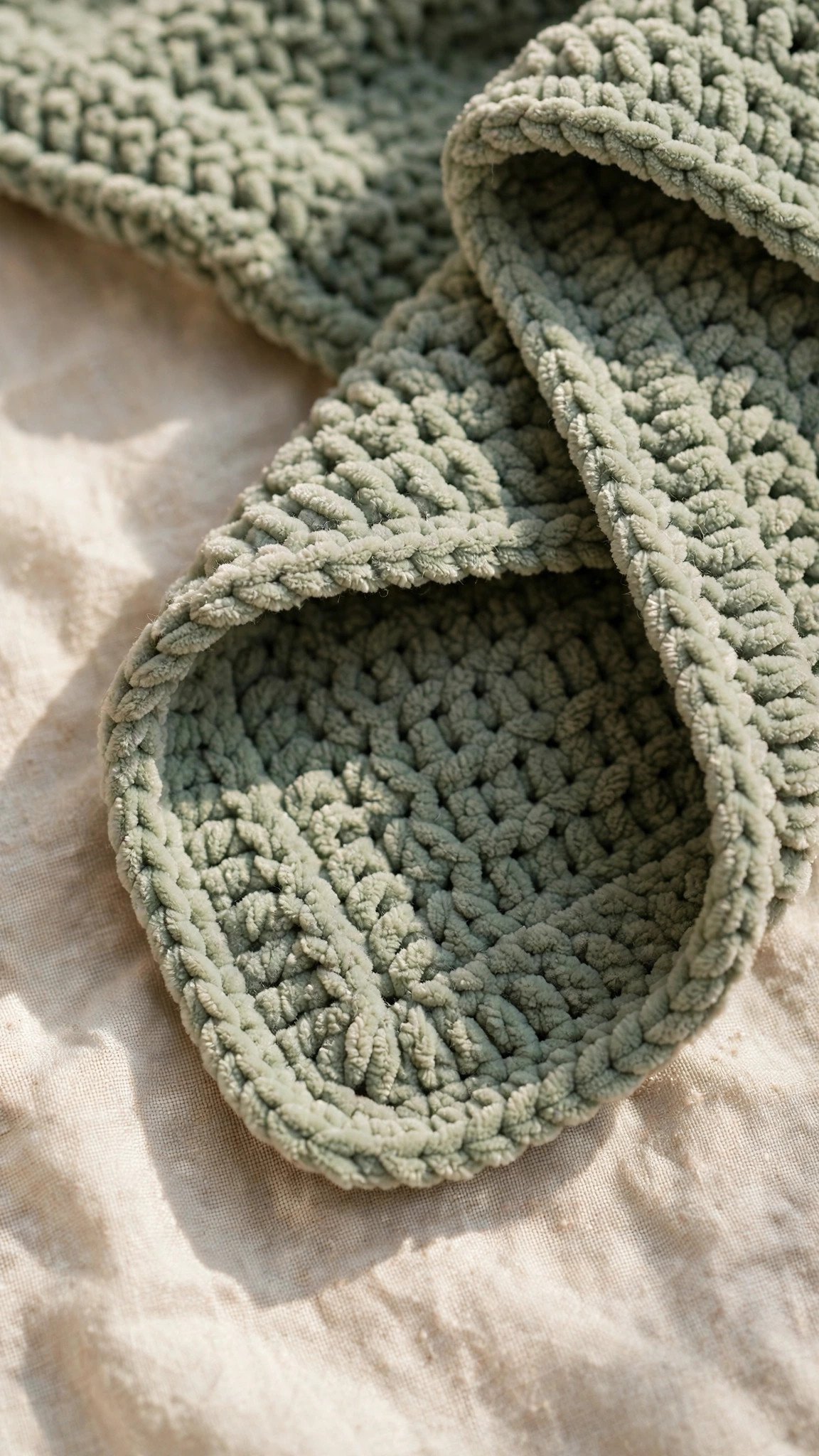
Border round: Chain 1, then work one single crochet into every stitch across the top edge. In each corner, work 3 single crochet into the corner stitch to turn smoothly. Down the sides, work one single crochet per row end (the row ends of moss stitch are tidy, so just go into each one). Join with a slip stitch to your first single crochet, fasten off, and weave in the ends.
One round is enough for a clean modern edge. If you want something fancier, add a second round the same way. For the softest feel, skip ruffles and picots: chenille yarn looks best in simple edges, and simple edges survive a hundred washes. This single crochet edge is all the finishing your blanket needs.
Wrapping Your Blanket as a Gift
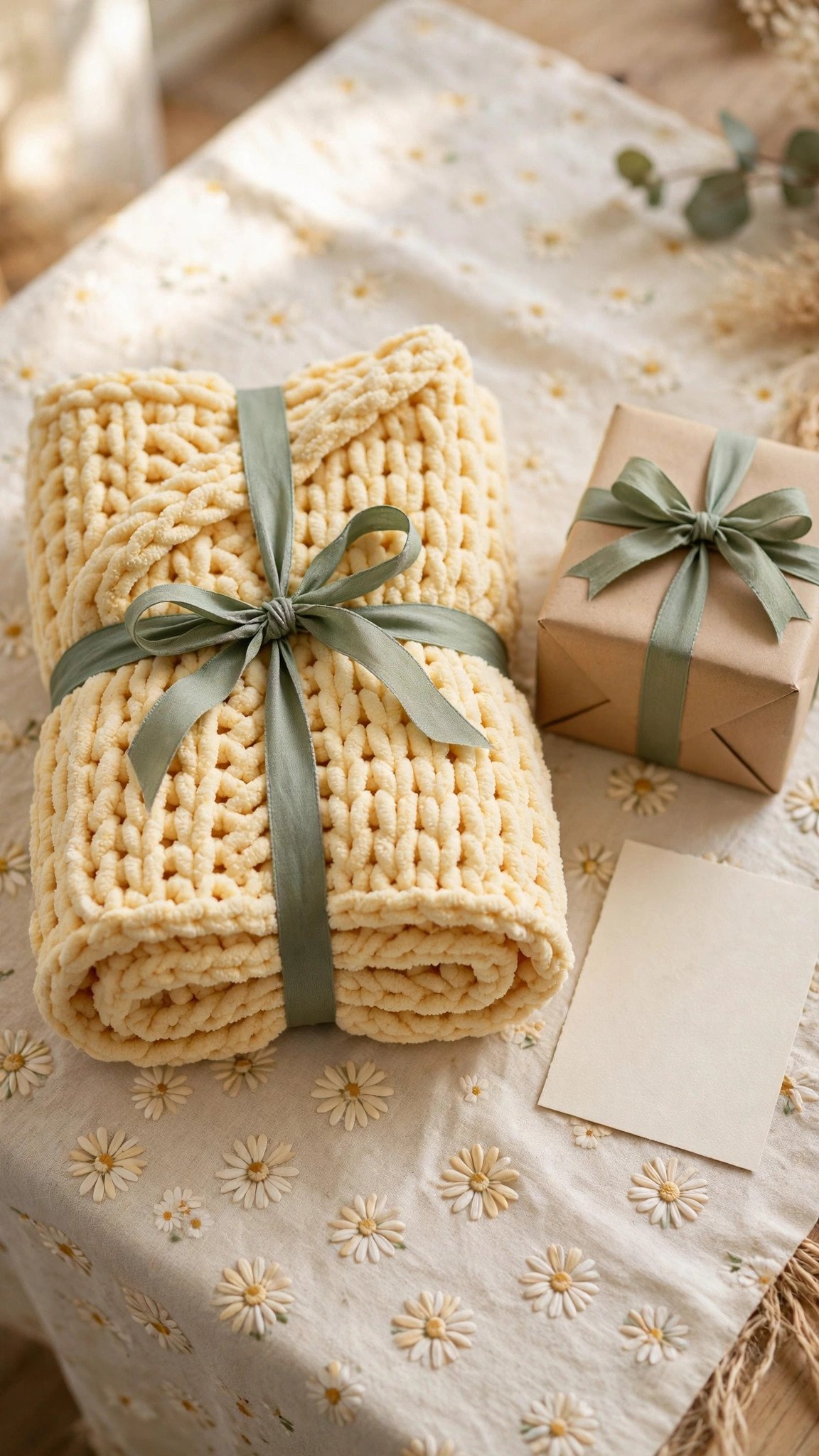
To present it as a gift, fold the blanket into a neat rectangle, tie it with a wide grosgrain ribbon (removable, never attached), and tuck in a card with the washing instructions. Parents receiving a handmade blanket always ask how to wash it, so answering in advance is the mark of a thoughtful maker. Write your name and the year on the card too. Someday that baby will be old enough to appreciate it.
A matching hat in the same yarn takes one evening and turns your blanket into a gift set that looks like it came from a boutique. If you are short on time, the blanket alone is already the star: it is the handmade gift new parents actually use every single day.
Washing and Care
Machine wash your blanket cold on a gentle cycle and tumble dry on low, or lay it flat to dry if you want to baby it. Chenille yarn actually gets softer with washing, which feels like a small reward for your effort. Expect a few loose fibers in the first wash; they are just the yarn settling in.
Skip fabric softener, which coats chenille fibers and makes them less absorbent over time, and never use bleach. If the blanket develops a stubborn spot, a little gentle soap and a soft cloth handle it without a full wash. With basic care, a chenille baby blanket stays soft and snuggly for years, which is exactly what you want from something a child might love to pieces.
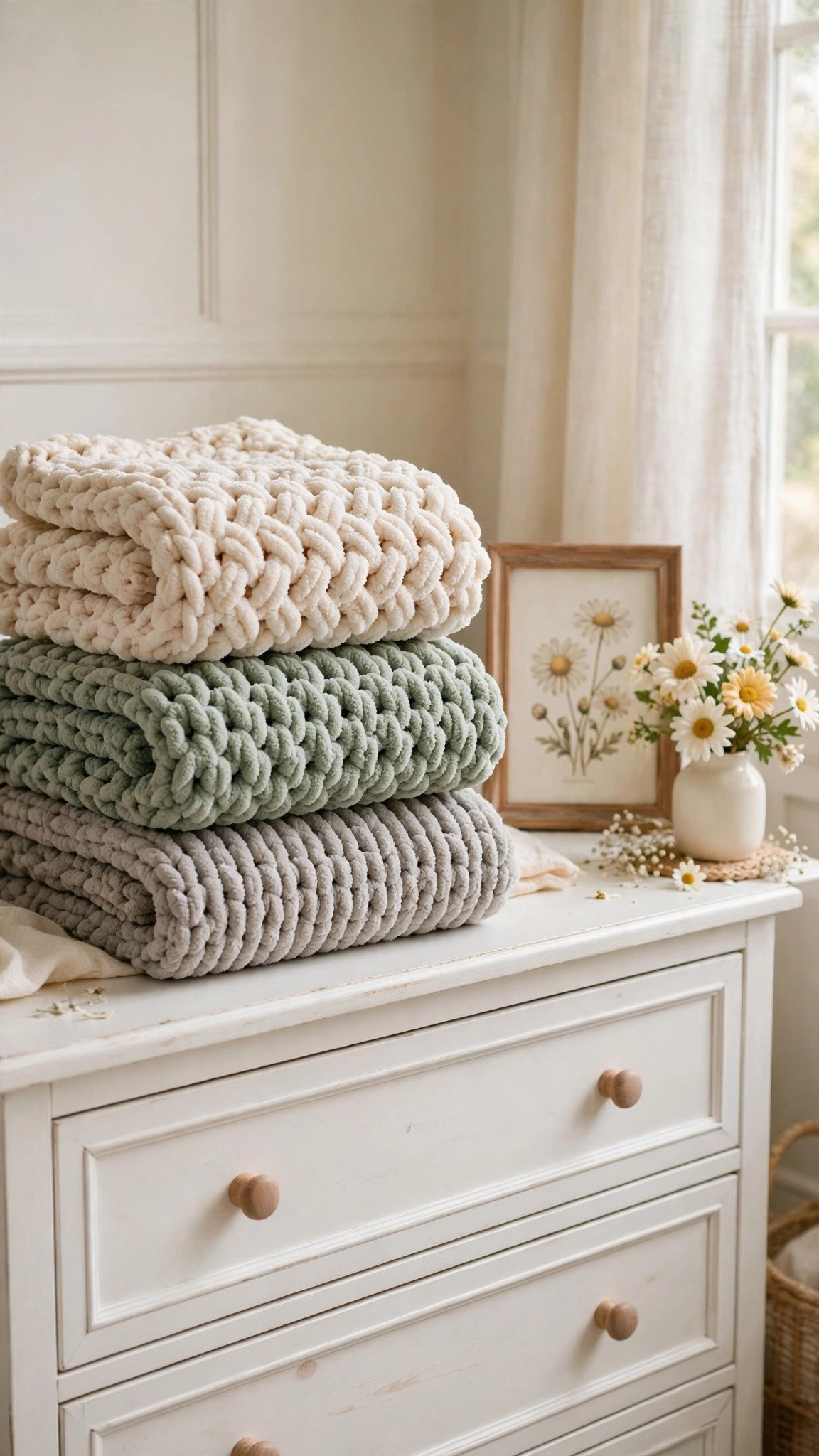
Ready for your next baby make? The Baby and Kids Crochet section has hats, booties, and cardigans waiting, and a matching hat in the same yarn as this blanket takes one evening and makes the gift set complete. Happy stitching, friend. Somewhere out there, a very small person is about to be very cozy.
Written by Wren
I am Wren, and I believe crochet should be fun from the very first loop. I test every tutorial and pattern here myself before it lands on Loop & Lark.